OpenClaw vs Nanobot vs PicoClaw: A Brief Technical Comparison for AI Agent Builders
Build process, performance, users, pros/cons, and practical applications of OpenClaw, NanoBot and PicoClaw for AI agent builders.
Feb 16, 2026 · 1 min read · Som
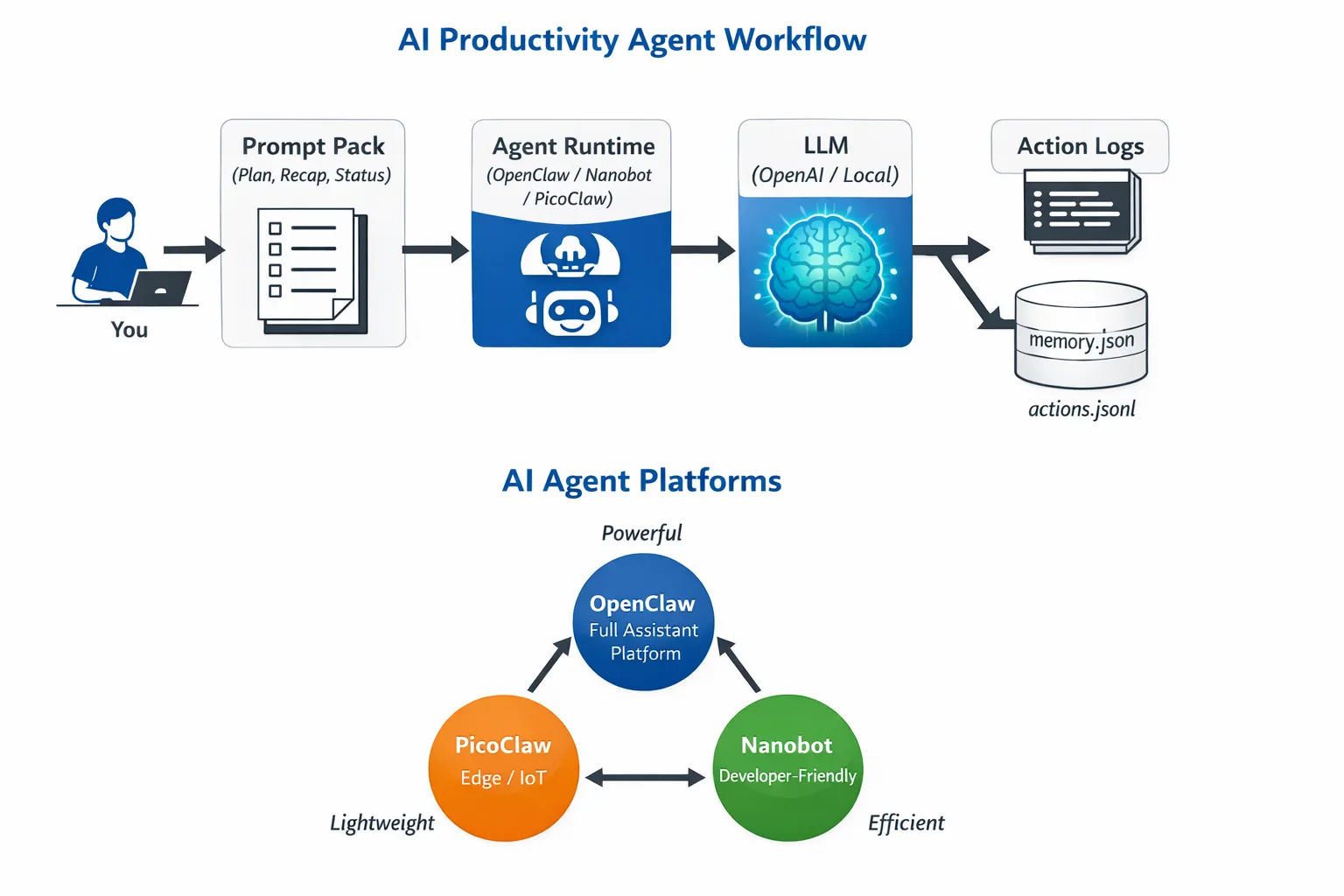
Choosing an agent framework is really a choice about trade-offs: how much control you want, how fast you need to ship, and how heavy a runtime you can afford. This piece compares three popular options — OpenClaw, NanoBot, and PicoClaw — across the dimensions that actually matter when you build.
How they differ
| Framework | Build process | Footprint | Best for |
|---|---|---|---|
| OpenClaw | Config + plugins | Heavier | Complex, multi-tool agents |
| NanoBot | Code-first | Medium | Balanced, production apps |
| PicoClaw | Minimal API | Lightweight | Simple, single-purpose bots |
Performance & practical applications
Each framework optimizes for a different point on the control-vs-speed curve. OpenClaw gives you the most extensibility at the cost of setup; PicoClaw gets a working agent running in minutes but leaves orchestration to you; NanoBot sits in between and tends to be the safest default for production workloads.
Picking one
Start from your use case, not the benchmark: prototype in the lightest tool that covers your needs, and only reach for the heavier framework once you hit a real orchestration or tooling limit.